Archives
- 2026-09
- 2026-08
- 2026-07
- 2026-06
- 2026-05
- 2026-04
- 2026-03
- 2026-02
- 2026-01
- 2025-12
- 2025-11
- 2025-10
- 2025-09
- 2025-03
- 2025-02
- 2025-01
- 2024-12
- 2024-11
- 2024-10
- 2024-09
- 2024-08
- 2024-07
- 2024-06
- 2024-05
- 2024-04
- 2024-03
- 2024-02
- 2024-01
- 2023-12
- 2023-11
- 2023-10
- 2023-09
- 2023-08
- 2023-07
- 2023-06
- 2023-05
- 2023-04
- 2023-03
- 2023-02
- 2023-01
- 2022-12
- 2022-11
- 2022-10
- 2022-09
- 2022-08
- 2022-07
- 2022-06
- 2022-05
- 2022-04
- 2022-03
- 2022-02
- 2022-01
-
The most potent compounds within the current series of
2024-08-28
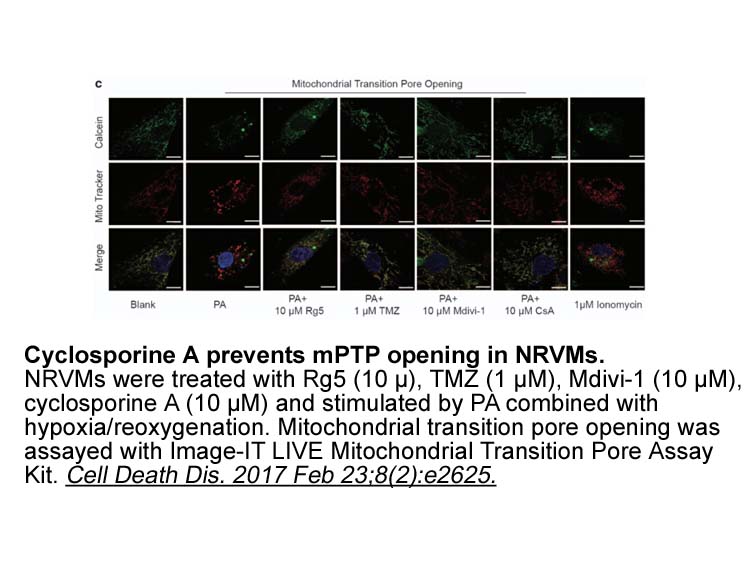
The most potent compounds within the current series of compounds were therefore , , , , and , with Ac-DEVD-AFC synthesis possessing the best selectivity towards the lyase reaction in comparison to the hydroxylase reaction, indeed, this compound was found to possess an IC value of 1210nM against t
-
br Conclusion br List of abbreviations
2024-08-28
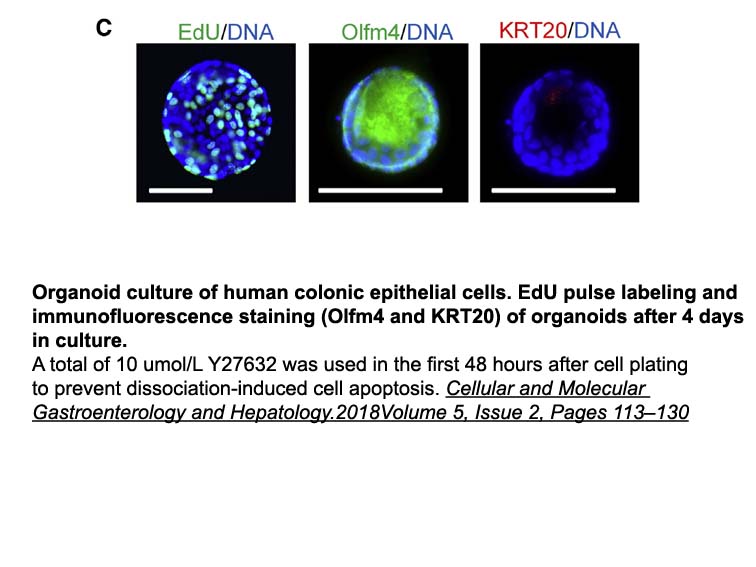
Conclusion List of abbreviations Acknowledgment The studies performed by our laboratory and presented in this review were supported by the Ministry of Education, Culture, Sports, Science and Technology of Japan, (KAKENHI 17590618 [to H.I.] and KAKENHI 22249017 [to Y.Y.]), and the Japanese S
-
br Materials and methods br Results br Discussion
2024-08-28

Materials and methods Results Discussion In this study, the orphan receptor GPR25 was cloned from several representative vertebrate species including zebrafish. Although the overall amino Berberine sequence identity among these species is not high (38–52%), our synteny analysis clearly ind
-
In a missense mutation at codon of the
2024-08-28
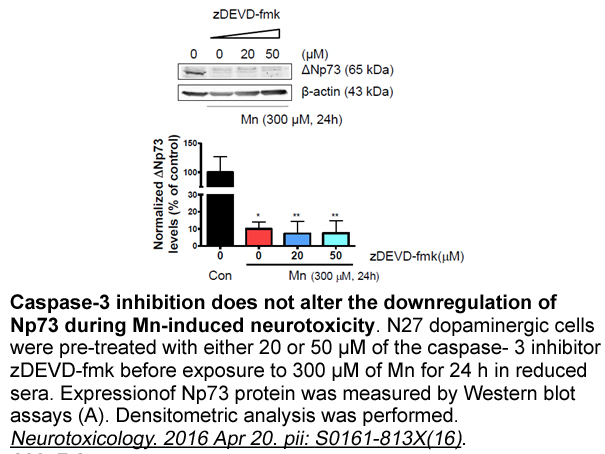
In 1989, a missense mutation at codon 102 of the PRNP gene was first reported to be associated with GSS and, in 1991, the same mutation was also found in affected members of the “H” family (Hsiao et al., 1989; Kretzschmar et al., 1991). By 1995, the pedigree of the “H” family included 221 family mem
-
The findings from our previous study indicate
2024-08-28
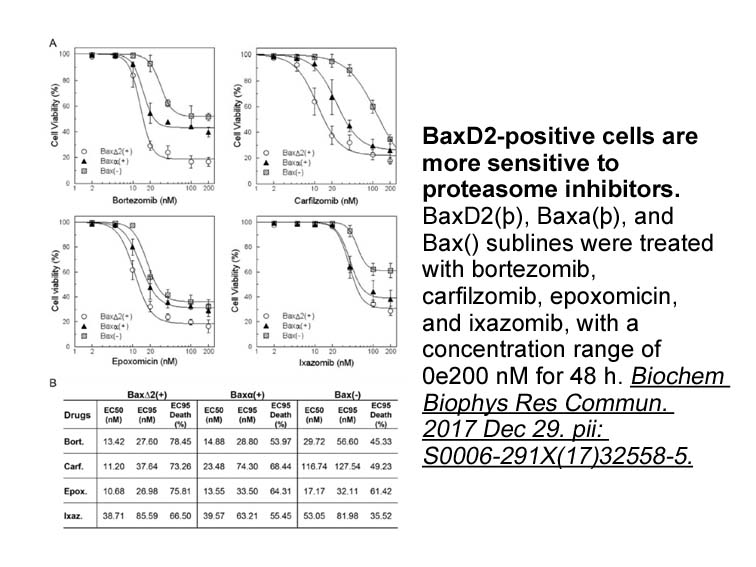
The findings from our previous study indicate that mitochondrial biogenesis of astrocytes is increased under experimental septic condition [25]. Recent studies have shown that IL-6 can activate AMPK by increasing the concentration of AMP [26], while AMPK regulates mitochondrial biogenesis and autop
-
A central question that arises in this discussion is whether
2024-08-28
A central question that arises in this discussion is whether enhanced neurobehavioral responses to food cues emerge as a consequence of weight gain, or whether there are intrinsic differences in the motivational responses to food cues that precede weight gain. In support of pre-existing differences,
-
We next developed a system
2024-08-27

We next developed a system for staging severity. Our guiding principles were the following. Two types of information about the research participant are staged independently from each other: (1) grading disease severity using biomarkers and (2) grading the severity of cognitive impairment. Measures u
-
b 35 receptor The proposed formulation is however challengin
2024-08-27
The proposed formulation is, however, challenging to solve since the structured sparsity-inducing norms are non-smooth. In order to solve the new objective function, we consider two different approaches: proximal averaging, which takes the average the solutions from the proximal operator for the ind
-
The lactam emerged as lead candidate due to its high
2024-08-27
The lactam (6) emerged as lead candidate due to its high selectivity, outstanding potency (against ALK or in clinically known ALK mutants), low in vitro clearance, and low efflux potential. The lactam (6) was selected for further profiling against the resistant ALK mutants. Preclinical rat pharmacok
-
br Adiponectin in prostate cancer PC was documented
2024-08-27
Adiponectin in prostate cancer PC was documented as the leading type of malignancy in males in the US with respect to both the estimated number of cases (22,800) and deaths (27,540) (Siegel et al., 2016). Studies have reported an association between low APN levels and the progression of PC (Micha
-
Derivatives of M that possess either an
2024-08-27

Derivatives of (+)-M100907 that possess either an alkyne or an azide have been synthesized. The most active enantiomer was obtained by resolution of a relatively early intermediate in the synthesis. The ability of these cpt 3 to maintain 5-HTR antagonist properties as (+)-M100907 was demonstrated to
-
In this article we have outlined
2024-08-27
In this article, we have outlined the increasing, as yet still circumstantial evidence that the 6TM domains of bacterial ACs might operate as receptors for as yet unknown ligands. Intriguingly, several architectural arguments are also applicable to the 6TM domains of mammalian membrane-bound ACs (mA
-
Regarding A Rs and A ARs
2024-08-27
Regarding A1Rs and A2ARs, basal conditions generate a low tone of endogenous adenosine and cause A1R activation, in contrast to situations of increased adenosine where A2AR activation becomes dominant. When adenosine concentrations rise, e.g. during hypoxia, also time appears likely important in reg
-
To date the modes of actions of pharmaceuticals in humans
2024-08-27

To date, the modes of actions of pharmaceuticals in humans and mammals are well-known (Fent et al., 2006), whereas knowledge of aquatic organisms, particularly invertebrates, is limited. This is problematic as these contaminants/pollutants have potentially harmful effects on wildlife organisms that
-
In an attempt to complete the overview of
2024-08-27
In an attempt to complete the overview of resistance mechanisms in Spanish codling moth populations, the aims of the present work were to assess the actual occurrence of AChE and kdr mutations in codling moth field populations from different pome fruit-growing areas of Spain, concurrently with the f
8537 records 122/570 page Previous Next First page 上5页 121122123124125 下5页 Last page