Archives
- 2026-10
- 2026-09
- 2026-08
- 2026-07
- 2026-06
- 2026-05
- 2026-04
- 2026-03
- 2026-02
- 2026-01
- 2025-12
- 2025-11
- 2025-10
- 2025-09
- 2025-03
- 2025-02
- 2025-01
- 2024-12
- 2024-11
- 2024-10
- 2024-09
- 2024-08
- 2024-07
- 2024-06
- 2024-05
- 2024-04
- 2024-03
- 2024-02
- 2024-01
- 2023-12
- 2023-11
- 2023-10
- 2023-09
- 2023-08
- 2023-07
- 2023-06
- 2023-05
- 2023-04
- 2023-03
- 2023-02
- 2023-01
- 2022-12
- 2022-11
- 2022-10
- 2022-09
- 2022-08
- 2022-07
- 2022-06
- 2022-05
- 2022-04
- 2022-03
- 2022-02
- 2022-01
-
To validate the effects of the G a HMT inhibitors
2022-01-11
To validate the effects of the G9a HMT inhibitors on HMEC-1 pten pathway and transcriptional responses we generated knockdown cells for G9a using an shRNA approach. Upon transduction of HMEC-1 and doxycycline activation of the shRNA, both G9a HMT mRNA and protein expression were effectively decrease
-
In addition recent research shows that HK contributes to the
2022-01-11
In addition, recent research shows that HK2 contributes to the inhibition of apoptosis through the suppression of the formation of mitochondrial permeability transition pores in association with voltage-dependent anion channel (VDAC) protein [11]. We also found that AKT2 mediates HK2 resistance to a
-
To characterize the basic functions of GPR in phagocytes we
2022-01-11
To characterize the basic functions of GPR84 in phagocytes, we have utilized the receptor selective antagonist GLPG1205 (a small selective antagonist of GPR84 developed by Galapagos NV [14]) together with ZQ16 (2-(hexylthio) pyrimidine-4,6-diol), a potent GPR84 selective agonist identified in a high
-
During embryogenesis the expression of zGpr
2022-01-11
During embryogenesis, the expression of zGpr84 was found higher at the cleavage stage and decreased at both blastula and gastrula stages. It indicates that maternal zGpr84 transcripts are present at the cleavage and blastula stages, since zygotic transcripts are not produced before the gastrula stag
-
LPC OMe LPC LPC and OMe LPC were shown
2022-01-11
LPC 14:0, 2-OMe-LPC 14:0, LPC 16:0 and 2-OMe-LPC 16:0 were shown to be most potent stimulators of intracellular calcium flux in the β cell model, which is one of key processes leading to insulin exocytosis. Yet, species with myristoyl residue initiate calcium influx through voltage-gated ZSTK474 wh
-
Considering that loss of LAG expression results
2022-01-11
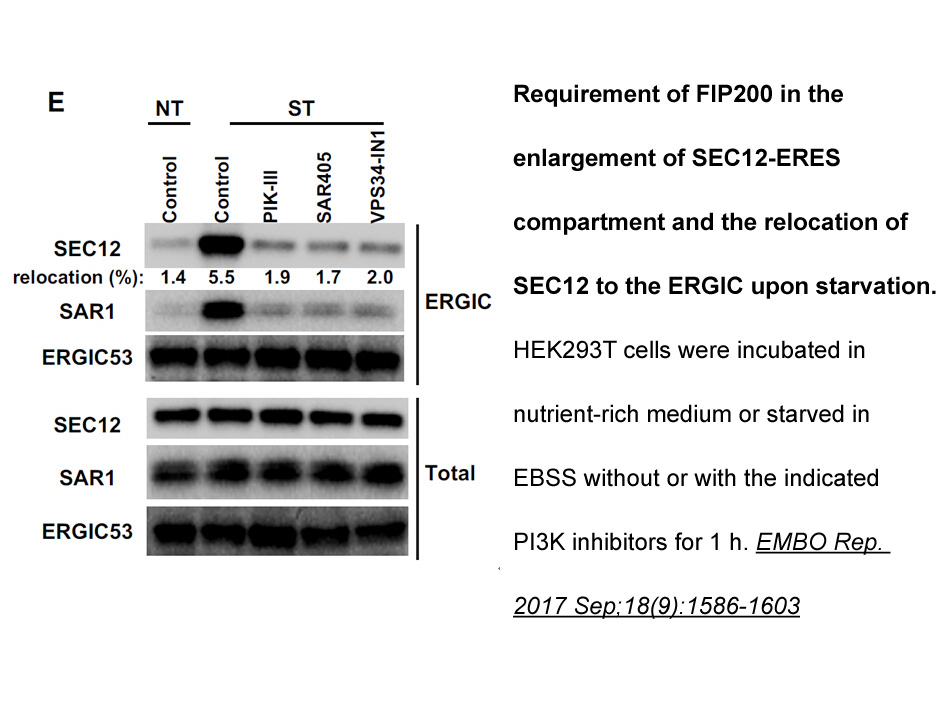
Considering that loss of LAG-3 SYBR Safe DNA Gel Stain mg results in increased CD4+ T cell homeostatic expansion, and that the ability of a cell to proliferate is tightly coupled to its metabolic profile, we hypothesized that LAG-3 regulates naive CD4+ T cell metabolism. Our results indicate that,
-
To test this concept we took advantage of
2022-01-10
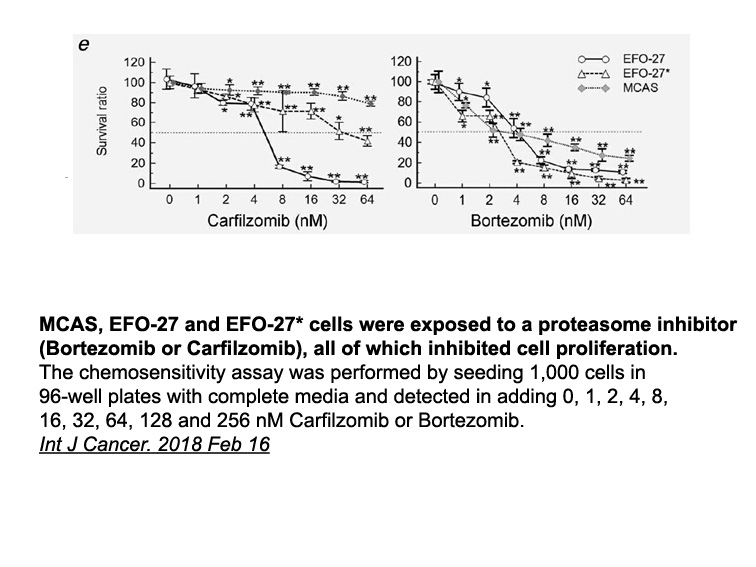
To test this concept, we took advantage of our large supply of various 2-pyridyl containing [3.1.0] cores (inactive with alkyl or aryl sulfonamides) and prepared the -methylimidazole sulfonamide analogs and (), as work form Merck demonstrated that the 2-pyridyl moiety was superior to the original 4-
-
Tranexamic Acid sale The glycine receptor is an ionotropic n
2022-01-10
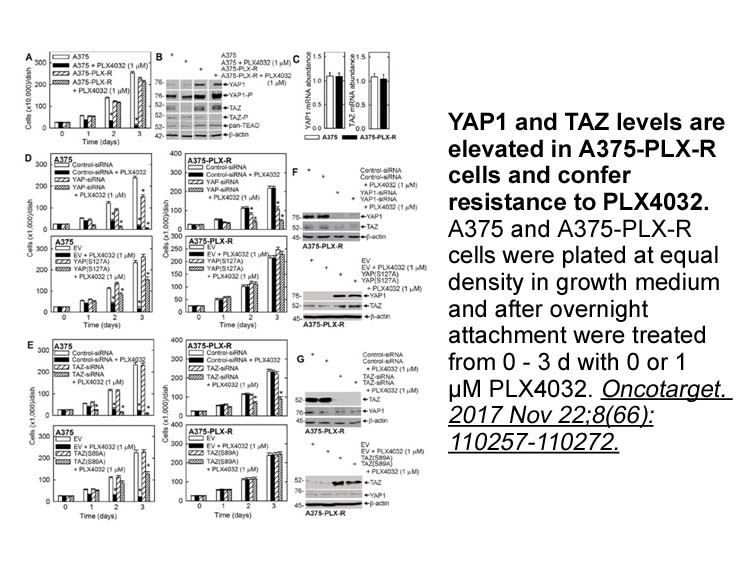
The glycine receptor is an ionotropic neurotransmitter receptor coupled to a chloride ion channel. Glycine receptors are typically described as inhibitory and distributed in the spinal cord and brainstem, though mRNA transcription labelling studies in rats show expression in the hippocampus, cingula
-
Physcion synthesis In this study we saw change in GHS
2022-01-10
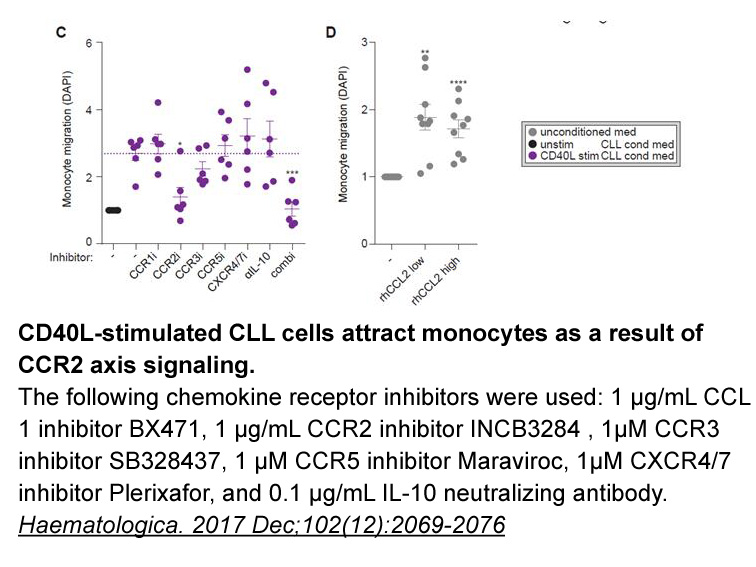
In this study, we saw change in GHS-R1a mRNA expression in fasting condition. It is noteworthy that changes in ghrelin and GHS-R1a mRNA expression synchronized in organs were examined. In the Physcion synthesis and pituitary, gene expression increased 4days after fasting, and the increased level de
-
br Presenilins and Wnt catenin
2022-01-10
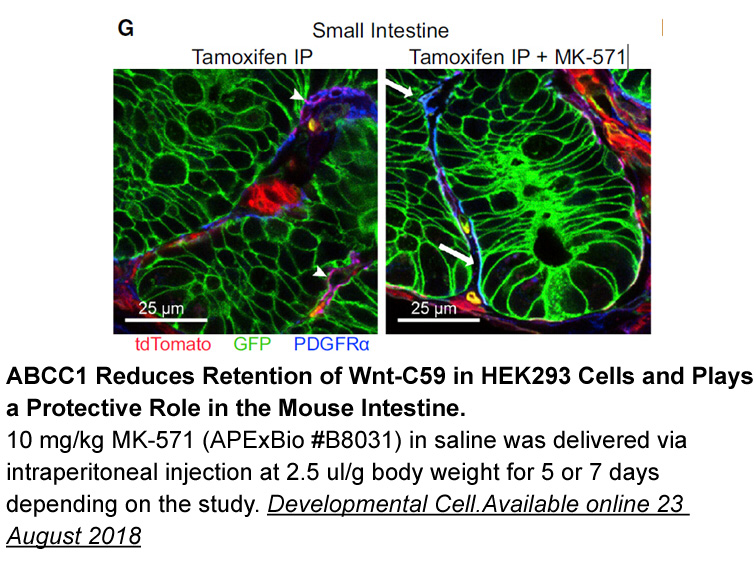
Presenilins and Wnt/β-catenin signalling Several groups have provided substantial data indicating that PS1 acts as a negative modulator of the transcriptional activity of the β-catenin/Tcf-4 complex (Fig. 4) [120], [121], [122]. β-Catenin is a multifunctional protein that was first described as a
-
br Conflicts of interests br Acknowledgements
2022-01-10

Conflicts of interests Acknowledgements We thank Drs. T. Tomita and T. Iwatsubo (Tokyo University, Tokyo, Japan) for anti-presenilin 1-CTF antiserum, Dr. A. Takashima (Gakushuin University, Tokyo, Japan) for anti-Pen-2 antiserum and the laboratory members for helpful comments and discussion. M
-
Chitosan CS a deacetylated derivative of chitin was
2022-01-10

Chitosan (CS), a deacetylated derivative of chitin, was chosen in this study due to its unique biological characteristics including biodegradability, biocompatibility, non-toxicity, and antimicrobial properties (Klossner, Queen, Coughlin, & Krause, 2008; Kong, Chen, Xing, & Park, 2010; Ravi Kumar, 2
-
We have previously designed an
2022-01-10
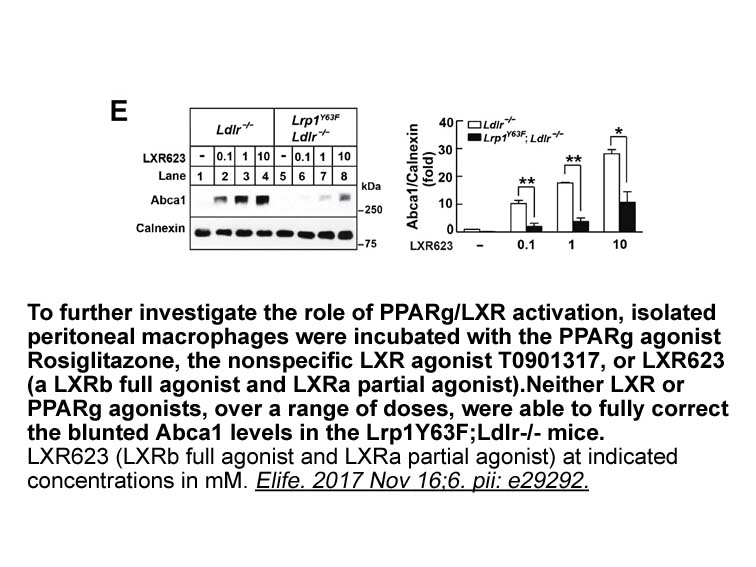
We have previously designed an azobenzene-based molecule, Razo, which could switch the conformations of G-quadruplex structures by photoregulation. 12, 13, 14, 15 However, it lacks selectivity to different G-quadruplexes. Therefore, we want to find a way to modify this molecule so that it could be u
-
br Acknowledgments This research was supported in part
2022-01-10
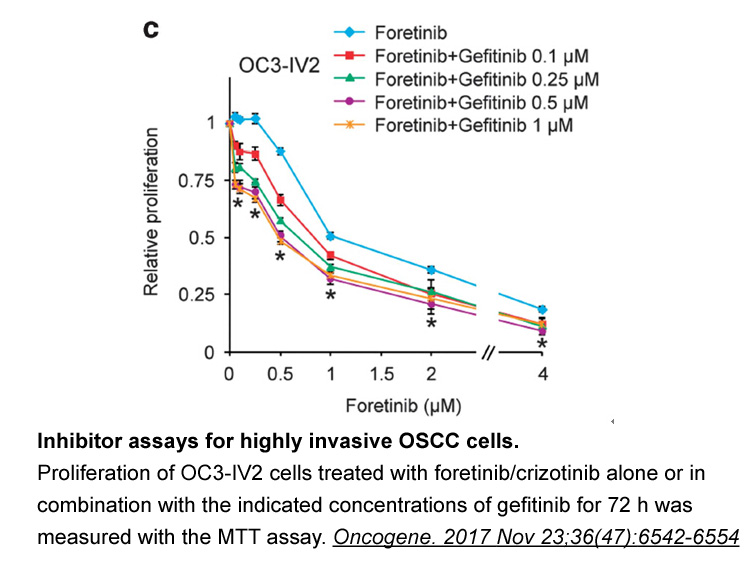
Acknowledgments This research was supported in part by National Institutes of Health IDeA Program COBRE grant GM110732; a USDA National Institute of Food and Agriculture Hatch project; and the Montana State University Agricultural Experiment Station. Introduction Propofol (2,6-Diisopropylphen
-
To evaluate the role of increased FPPS expression
2022-01-10
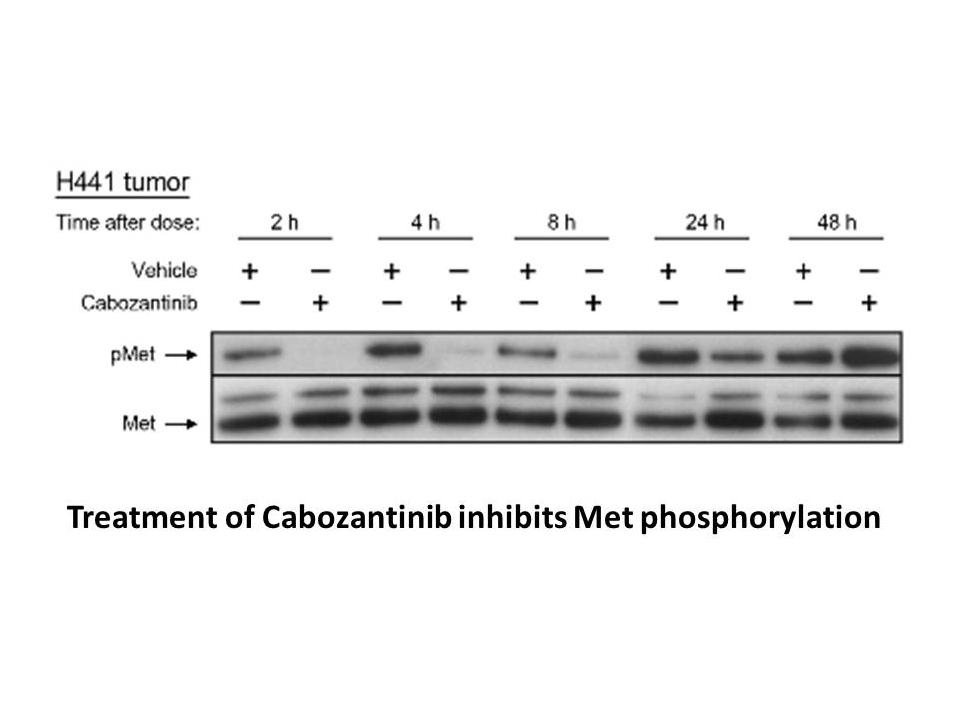
To evaluate the role of increased FPPS expression in paclitaxel-treated cells, we investigated the effects of FPPS on PRT-060318 progression. DNA content analysis showed that the number of cells accumulating in the G/M phase increased in a dose-dependent manner in paclitaxel-treated cells (A and B)
8566 records 567/572 page Previous Next First page 上5页 566567568569570 下5页 Last page